

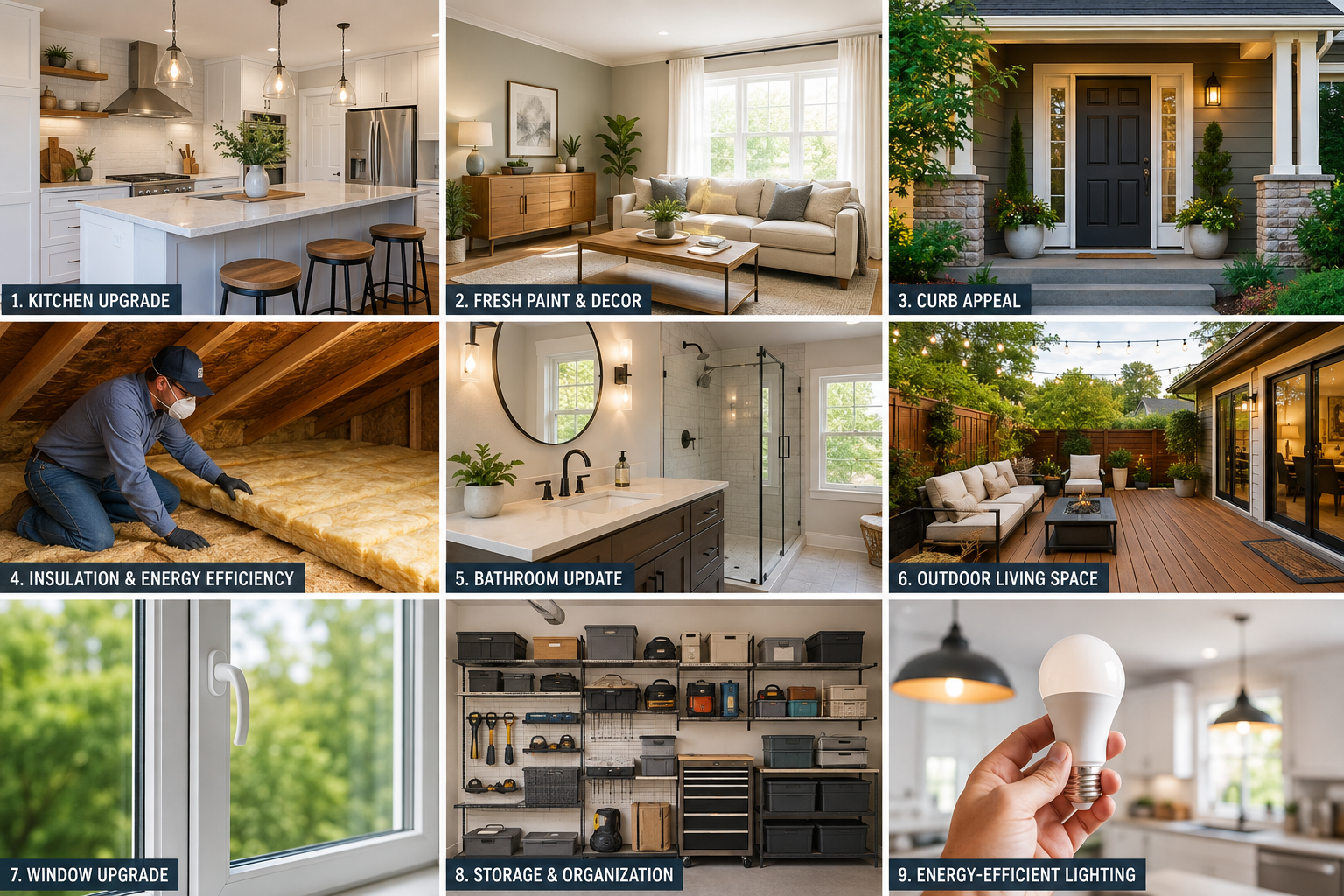
Your home does not need a complete renovation to feel newer, more comfortable, or more functional. In many cases, a few carefully planned home improvement projects can make a noticeable difference in the way your home looks, feels, and performs.
Whether you are preparing to sell your property, updating an older house, improving energy efficiency, or simply creating a more comfortable living space, the best approach is to focus on improvements that provide practical benefits as well as visual appeal.
Some projects are inexpensive and can be completed over a weekend, while others require professional planning and a larger budget. The key is to prioritize improvements according to your home’s condition, your goals, and your available budget.
Here are 15 practical home improvement ideas worth considering.
1. Improve Your Home’s Lighting
Good lighting can completely change the atmosphere of a room.
Start by replacing outdated light fixtures with modern options that match your home’s design. You can also combine different types of lighting, including ceiling lights, task lighting, and accent lighting.
For example, under-cabinet lighting can make a kitchen more functional, while strategically placed lamps can make a living room feel warmer and more inviting.
If you are replacing bulbs, consider energy-efficient LED options. Small lighting changes can improve both the appearance and functionality of your home without requiring a major renovation.
2. Refresh Your Walls With Paint
One of the simplest home improvement projects is painting.
A fresh coat of paint can make an old room look cleaner and more modern. Light, neutral colors can make smaller spaces feel larger, while carefully selected accent colors can add personality.
Before painting, repair cracks, holes, and damaged surfaces. Proper preparation often makes a bigger difference than the paint itself.
For a long-term update, choose colors that complement your flooring, furniture, doors, and natural lighting.
3. Upgrade Your Front Door and Entryway
Your entryway creates the first impression of your home.
If your front door looks worn or outdated, consider repainting it, replacing the hardware, or installing a new energy-efficient door. A clean entryway can also be improved with outdoor lighting, house numbers, plants, or a simple welcome mat.
An attractive entrance does not have to be expensive. Even small improvements can make the exterior feel more maintained and welcoming.
4. Improve Insulation and Air Sealing
Some of the most valuable home improvements are the ones you cannot easily see.
Poor insulation and air leaks can make a home uncomfortable and increase heating and cooling costs. The U.S. Department of Energy recommends considering insulation and air sealing as important parts of improving a home’s energy performance.
Common areas where air leakage can occur include:
- Attics
- Around windows and doors
- Plumbing and electrical penetrations
- Duct connections
- Recessed lighting
- Gaps around exterior walls
- Attic access panels
Caulking and weatherstripping can address some smaller leaks, while larger problems may require professional assessment.
Before adding insulation, it is important to understand where air is escaping. Insulation and air sealing work together, and poorly addressed air movement can reduce the effectiveness of insulation.
5. Give Your Kitchen a Budget-Friendly Upgrade
A kitchen renovation does not always require replacing everything.
If your cabinets are structurally sound, repainting or refinishing them can provide a completely different appearance. New cabinet handles, a modern backsplash, updated lighting, or a new faucet can also refresh the space.
Consider focusing your budget on the features you use most often.
For example, if you cook frequently, improving countertop space or storage may provide more value than simply choosing expensive decorative materials.
6. Update the Bathroom
Bathrooms are another area where relatively small improvements can have a significant visual impact.
Consider replacing outdated faucets, mirrors, lighting fixtures, shower hardware, or cabinet handles. Re-caulking around tubs and showers can also make an older bathroom look cleaner.
If the bathroom has moisture problems, leaks, mold, or damaged surfaces, address those issues before concentrating on cosmetic upgrades.
A beautiful bathroom is useful, but a dry, properly ventilated, well-maintained bathroom is even more important.
7. Make Your Home More Energy Efficient
Energy efficiency should be considered whenever you plan a major home improvement project.
Depending on the property, improvements may include better insulation, air sealing, efficient windows and doors, duct sealing, efficient lighting, or upgraded heating and cooling equipment.
The Department of Energy notes that improvements to a home’s envelope—including insulation, air sealing, windows, and doors—can improve comfort and reduce energy use.
Instead of automatically replacing everything, identify where your home is losing energy first. A home energy assessment can help you determine which upgrades deserve priority.
8. Upgrade Your Windows
Old or poorly sealed windows can affect both comfort and energy efficiency.
If replacement windows are outside your budget, start by checking for drafts and damaged weatherstripping. Depending on the condition of the existing windows, repairs or improved sealing may provide a practical short-term solution.
If you decide to replace windows, compare factors such as energy performance, frame material, installation quality, climate, and long-term maintenance.
Remember that an expensive window will not perform as expected if it is installed incorrectly.
9. Improve Your Outdoor Living Space
Your home improvement plans do not have to stop at the front door.
A backyard, patio, balcony, or deck can become an extension of your living space.
Consider adding:
- Outdoor seating
- A small dining area
- Exterior lighting
- Planters
- Shade
- A fire-safe outdoor feature where appropriate
- A simple walkway
- Privacy landscaping
You do not need a huge yard to create a useful outdoor area. Even a small space can become more enjoyable with thoughtful planning.
10. Increase Storage and Organization
Sometimes the best improvement is simply making better use of the space you already have.
Built-in shelves, closet organizers, garage storage systems, kitchen organizers, and bathroom storage can reduce clutter without expanding your home.
Look for unused vertical space. Wall-mounted shelving, hooks, cabinets, and organizers can provide storage while keeping floors and countertops clear.
A more organized home can feel significantly larger without adding a single square foot.
11. Improve Your Home’s Curb Appeal
Curb appeal is important whether you plan to sell your home or simply want it to look better.
Start with basic maintenance:
- Clean exterior surfaces
- Trim overgrown plants
- Remove weeds
- Clean windows
- Repair damaged steps
- Update exterior lighting
- Refresh the front door
- Maintain the lawn or landscaping
Once basic maintenance is complete, consider decorative improvements such as planters, updated house numbers, or a coordinated exterior color scheme.
A well-maintained exterior often makes a stronger impression than expensive decorations.
12. Upgrade Flooring Where It Matters Most
Damaged or outdated flooring can make an otherwise attractive room look tired.
You do not necessarily need to replace flooring throughout the entire house. Prioritize rooms where the flooring is heavily damaged or receives the most traffic.
When choosing new flooring, consider durability, maintenance, moisture exposure, household pets, children, and the overall style of the home.
For high-traffic areas, durability should generally be more important than appearance alone.
13. Improve Ventilation and Indoor Comfort
A comfortable home is about more than temperature.
Proper ventilation can help manage moisture and improve indoor air conditions. Bathrooms and kitchens are particularly important because they produce significant amounts of moisture.
Use exhaust fans when cooking or showering and make sure ventilation systems are functioning properly.
If you are making major changes to insulation or air sealing, consider ventilation as part of the overall project rather than treating each improvement separately. The Department of Energy’s guidance emphasizes taking a whole-house approach because different building systems interact with one another.
14. Make Your Home Safer
Some of the most worthwhile home improvements are related to safety.
Check smoke alarms and carbon monoxide detectors regularly. Inspect stairs, railings, electrical outlets, exterior walkways, and areas where water could create slipping hazards.
If your home is older, consider having important systems inspected by qualified professionals.
Safety improvements may not be as visually exciting as a new kitchen, but they can protect your family and prevent expensive problems.
15. Plan Improvements Around Your Long-Term Goals
Before starting any major project, ask yourself why you are improving the home.
Are you planning to stay for ten years?
Are you preparing to sell?
Do you want lower energy costs?
Do you need more functional space?
Are you updating an older property?
Your answer should influence your priorities.
For example, someone planning to stay in the home for many years may prioritize comfort, energy efficiency, storage, and durability. Someone preparing to sell may focus more heavily on maintenance, curb appeal, kitchens, bathrooms, and improvements that appeal to potential buyers.
How to Prioritize Home Improvement Projects
If you have a long list of projects, do not try to complete everything at once.
A useful approach is to divide improvements into three categories:
Priority 1: Repairs and Safety
Start with problems that could become more expensive or dangerous if ignored.
Examples include:
- Roof leaks
- Plumbing leaks
- Electrical problems
- Structural damage
- Water intrusion
- Mold or moisture problems
- Unsafe stairs or railings
Priority 2: Comfort and Efficiency
Once urgent repairs are handled, focus on improvements that make the home work better.
These may include:
- Insulation
- Air sealing
- HVAC maintenance or upgrades
- Window improvements
- Better lighting
- Ventilation
- Storage
Priority 3: Appearance and Lifestyle
Finally, invest in cosmetic and lifestyle improvements.
Examples include:
- Painting
- Landscaping
- Decorative lighting
- New fixtures
- Flooring
- Outdoor living areas
- Kitchen and bathroom updates
This approach can help prevent homeowners from spending thousands of dollars on cosmetic upgrades while more important maintenance problems remain unresolved.
Should You DIY or Hire a Professional?
Not every home improvement project requires a contractor.
Painting, basic organization, some landscaping, simple hardware replacement, and certain cosmetic upgrades may be suitable for homeowners who have the necessary skills.
However, electrical work, major plumbing, structural modifications, roofing, HVAC work, and other specialized projects may require qualified professionals.
When hiring a contractor, compare multiple estimates, check references, verify relevant licensing or insurance requirements, and make sure the scope of work is clearly documented.
The cheapest estimate is not always the best option. Look for a combination of experience, communication, quality, and reasonable pricing.
Final Thoughts
The best home improvement projects are not necessarily the biggest or most expensive ones.
A successful improvement should solve a problem, improve comfort, increase functionality, enhance appearance, or make the home more efficient. In many cases, several smaller projects can create a bigger overall impact than one expensive renovation.
Start by inspecting your home, identifying the areas that need attention, and setting a realistic budget. Then prioritize repairs, efficiency, comfort, and appearance according to your long-term goals.
Whether you are refreshing one room or planning a complete renovation, thoughtful improvements can help turn an ordinary house into a more comfortable, efficient, and enjoyable home.
HomeReviveLiving.com is dedicated to practical home improvement ideas, renovation inspiration, home maintenance advice, energy-efficiency tips, and useful information to help homeowners make better decisions about their homes.